
27 October 2026 | Community resilience
Over the last few days there has been a fair amount of discussion about the Government asking people to keep enough essential supplies at home to get through three days of disruption. I think the principle is sensible. What I don’t think we can do is pretend everyone has the means to put it into practice.
For many households, there’s precious little left at the end of the week. When you’re already making difficult decisions about food, heating, electricity and other essentials, being told to buy more and put it away for a rainy day isn’t particularly helpful unless there’s a realistic way to do it.
That’s where Project40Seven’s Rainy Day Stash comes in. And importantly, it’s already running.
Building your safety net with every visit
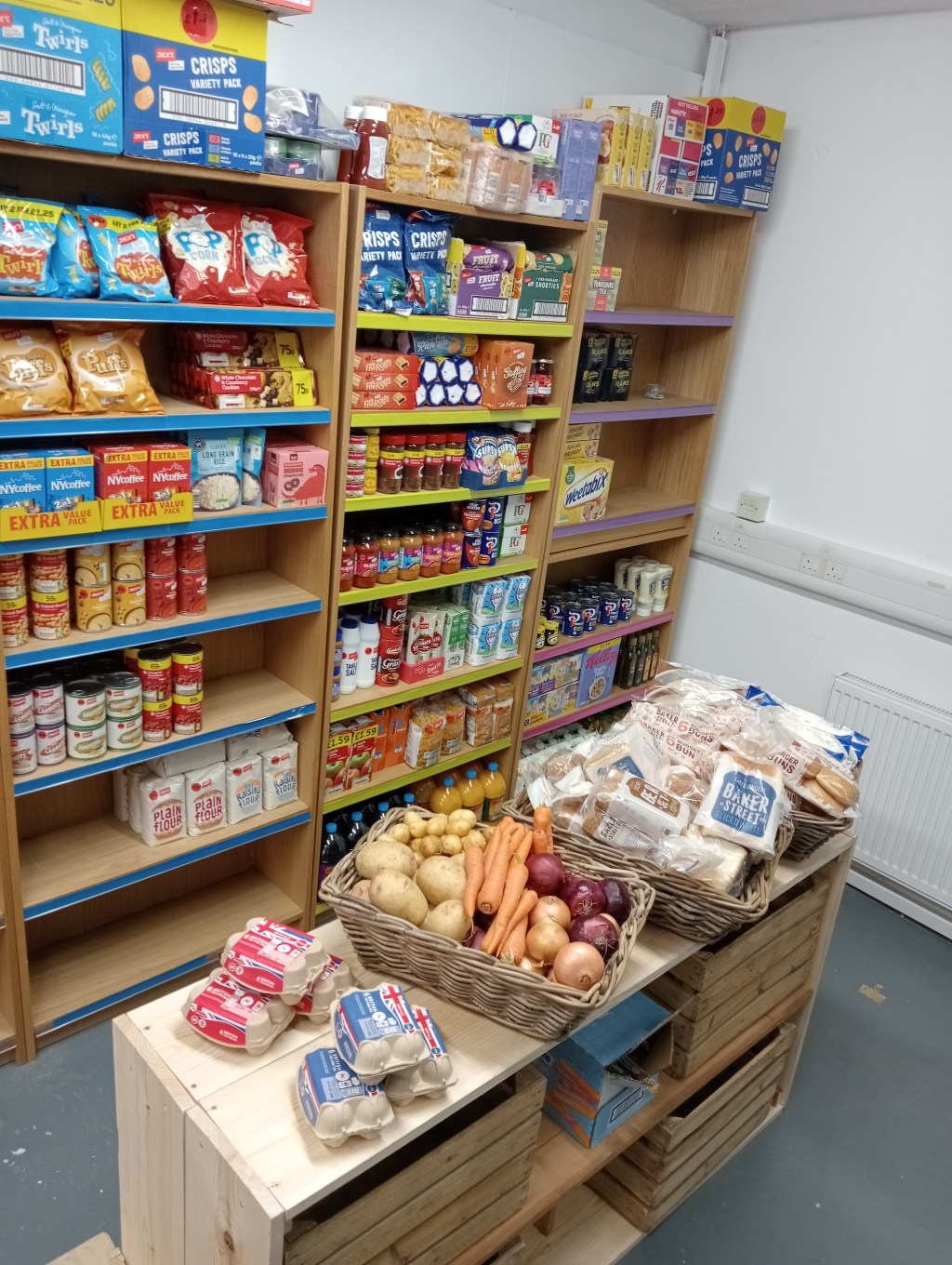
At the end of a visit to The Leiston Pantry or Leiston United Church Food Bank, people can now choose one free tin from a selection of suitable products we’ve put aside for the scheme. It’s theirs to take home and keep, rather than something they need to use for this week’s meals.
One tin might not sound like a great deal. But one becomes two, then three, and before long there’s the start of a small reserve in the cupboard. It costs the household nothing extra, doesn’t require anyone to suddenly find £20 or £30 for emergency shopping, and it puts the choice in their hands.
We’re calling it the Rainy Day Stash because that’s exactly what it is: a little something held back for a time when things don’t go to plan. Building your safety net with every visit.
Preparedness isn’t panic buying
The Government’s Be Ready guidance and three-day checklist, launched on 22 October, is about being able to cope with temporary disruption to things we normally take for granted: power, water, communications and access to food. The advice includes bottled water, non-perishable food that doesn’t need cooking, a torch, a way to receive information and checking in with people around you.
That doesn’t mean there’s an emergency around the corner, and it certainly isn’t a reason to rush out and clear the supermarket shelves. Buying far more than we need, all at once, risks creating precisely the shortages we’re supposed to be preparing for. A little, regularly, makes much more sense.
And preparedness isn’t only about what’s in a cupboard. It’s knowing who you can call, checking on a neighbour, making sure essential medication and contact information are accessible, and thinking about what you’d do if the lights, phone signal or heating stopped working for a while.
The reality on the ground
At Project40Seven we see the pressures people are under every day. We also feel rising running costs ourselves, particularly utilities. We’re not saying that we’re in the red; we are saying that keeping essential community services going is becoming more expensive, just as households are finding it harder to stretch what they have.
Resilience has to work for the people who have the least room to manoeuvre, not just the people who can afford a spare cupboard full of supplies. Our Pantry, Food Bank, Warm Welcome and wider community work are built around that principle. The Rainy Day Stash is another small but useful part of it.
We don’t need anyone to panic. We do need to think ahead, look out for one another and make practical preparations possible for everyone.
Read the official advice — or help us do more
For the Government’s full guidance, including its free steps and three-day checklist, visit Be Ready for Emergencies. It explicitly recognises that not every household can take every step, and encourages people to start with what they can.
If you’re a local business, organisation or individual who would like to support the Rainy Day Stash, help supply suitable long-life foods or work with us on community resilience, we’d be pleased to hear from you.


Leave a Reply